Shitrix: the Citrix bug that taught everyone how fast a perimeter RCE goes from PoC to pandemic
CVE-2019-19781, 'Shitrix,' was a path-traversal RCE in Citrix NetScaler. After disclosure with no patch, a public exploit dropped and mass exploitation followed within days. It set the template for the NetScaler-as-target story that CitrixBleed later continued.
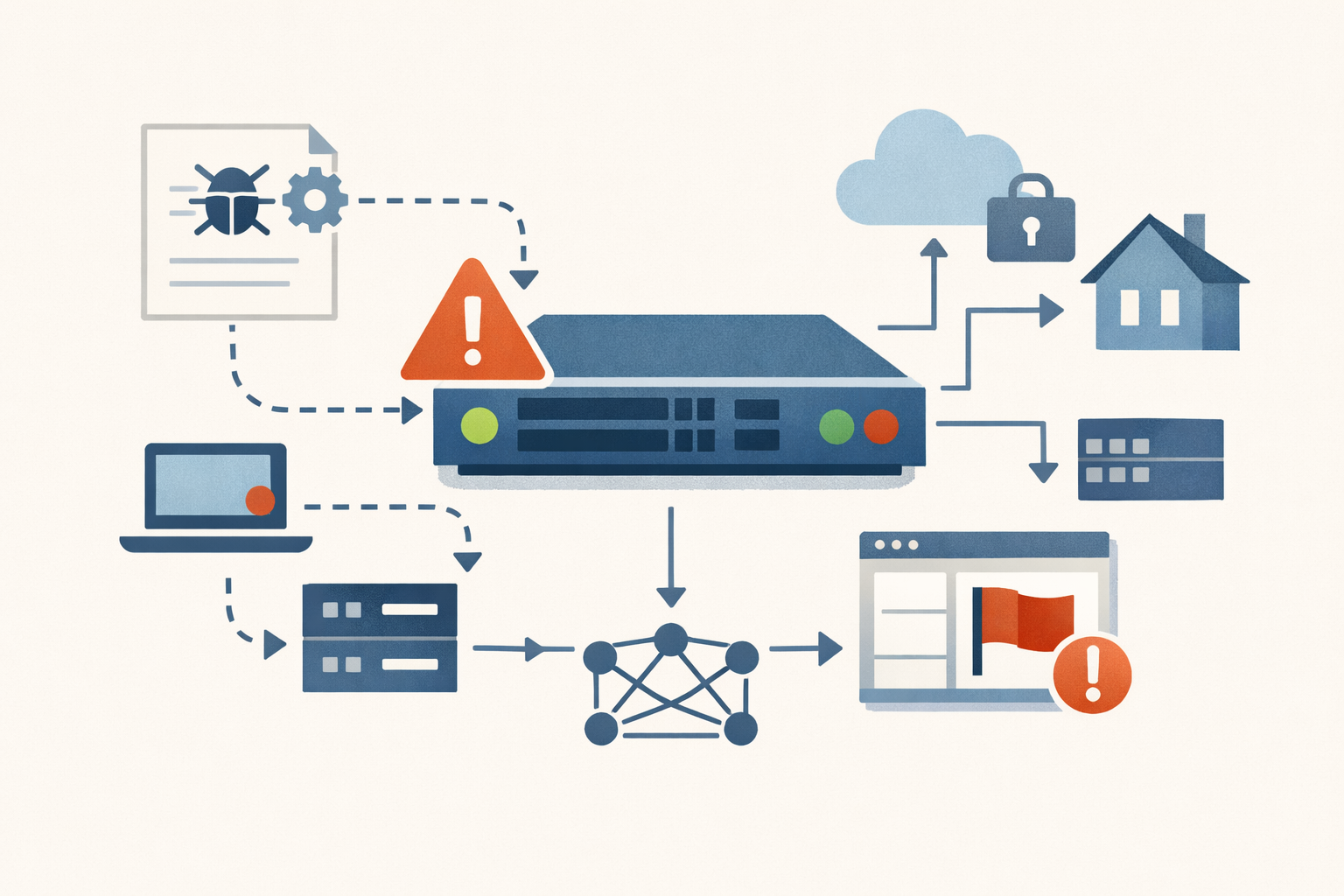
Before CitrixBleed, there was Shitrix. CVE-2019-19781 was a path-traversal vulnerability in Citrix NetScaler ADC and Gateway (and the related products in CVE-2019-13608 and CVE-2019-11634) that allowed unauthenticated remote code execution. Citrix disclosed it in December 2019 with mitigations but no patch, and the gap was brutal: public exploit code appeared in early January 2020, and mass exploitation, web shells, cryptominers, and ransomware staging, followed within days against the large population of internet-facing NetScaler appliances. It set the template for the story this catalog keeps retelling, the perimeter appliance as a perennial, rapidly-weaponized target, which CitrixBleed and its sequels continued years later.
What the bug is
The flaw was a directory traversal in the NetScaler web handling that let an unauthenticated attacker reach a path enabling them to write and execute a template, yielding code execution as the appliance user. Affected NetScaler ADC/Gateway across the supported versions; Citrix shipped mitigations in December 2019 and patches in January 2020. CISA flagged it for ransomware use. The exploitation was so broad that incident responders spent months cleaning up web shells, including ones left by opportunistic actors who “patched” the bug behind them to lock out competitors.
The lessons it established
Shitrix is worth remembering because it crystallized several truths that the catalog has reinforced ever since:
- Disclosure without a patch starts a race you can lose. The weeks between Citrix’s mitigation guidance and the actual patch were when the public exploit landed and mass exploitation began. As with the Exchange OWASSRF and Follina cases, the mitigation-only window is dangerous, and the mitigations must be applied immediately, not when the patch eventually arrives.
- Patching doesn’t remove the web shell. Many Shitrix victims patched and remained compromised because attackers had already planted web shells. The same “patch is step one of incident response” lesson as NetScaler CVE-2023-3519: hunt for implants, don’t assume the patch cleaned up.
- NetScaler is a perennial target. Shitrix, then CitrixBleed (CVE-2023-4966), then CitrixBleed 2 and 3. The appliance keeps drawing top-tier attention because it fronts remote access for huge numbers of organizations.
What to do
- Patch NetScaler and keep it current, treating Citrix updates as emergency-grade. The disclosure-to-exploitation window for these appliances is consistently days.
- Apply vendor mitigations the moment they’re published, and replace them with the patch as soon as it ships; never treat a mitigation as the end state.
- Assume compromise on any appliance exposed during the 2019-2020 window (or any later NetScaler exposure) and hunt for web shells and implants; rebuild rather than trust a possibly-compromised appliance, and rotate the secrets it held.
- Restrict the management interface to a management network, and minimize what the appliance exposes to the internet.
The reframe is to internalize that perimeter appliances like NetScaler are not patch-and-forget infrastructure; they’re among the most aggressively-targeted devices you run, with a track record of rapid weaponization and post-exploitation persistence. Shitrix was the early, loud lesson; the NetScaler entries since have only confirmed it. Patch fast, mitigate immediately, hunt for what was left behind, and treat the appliance as a perennial target. We track the NetScaler entries as one long-running story, from Shitrix through CitrixBleed, because the attackers never stopped.
Sources
Share
Related field notes
-
Patching the NetScaler RCE doesn't tell you if a webshell is already on it
CVE-2023-3519 was an unauthenticated RCE on Citrix NetScaler used as a zero-day to drop webshells. Patching closes the hole; it doesn't remove an implant planted before you patched. With a black-box appliance, finding out is the hard part. Here's the IOC-hunt runbook.
-
CitrixBleed: the patch closed the leak but left the stolen keys working
CVE-2023-4966 leaked post-MFA session tokens from NetScaler. Organizations that patched and stopped there got breached anyway, because a stolen token still worked after the update. The action that mattered was killing every active session, and a lot of victims skipped it.
-
Fortinet's other products take their turn: FortiWeb, FortiManager, FortiClient EMS
Beyond the long-running FortiOS auth-bypass cycle, 2025-2026 brought a wave of exploited bugs in FortiWeb, FortiManager, and FortiClient EMS, SQL injection, path traversal, auth bypass, and a format-string RCE. Same vendor, same perimeter-and-management target profile.
One email, every weekday morning.
You're in. Check your inbox.