Oracle blamed its customers for a zero-day it hadn't patched
Oracle's first public statement during active Cl0p exploitation told customers the breach was their fault for not applying a patch that didn't exist. The correction came Saturday night, behind a paywall.
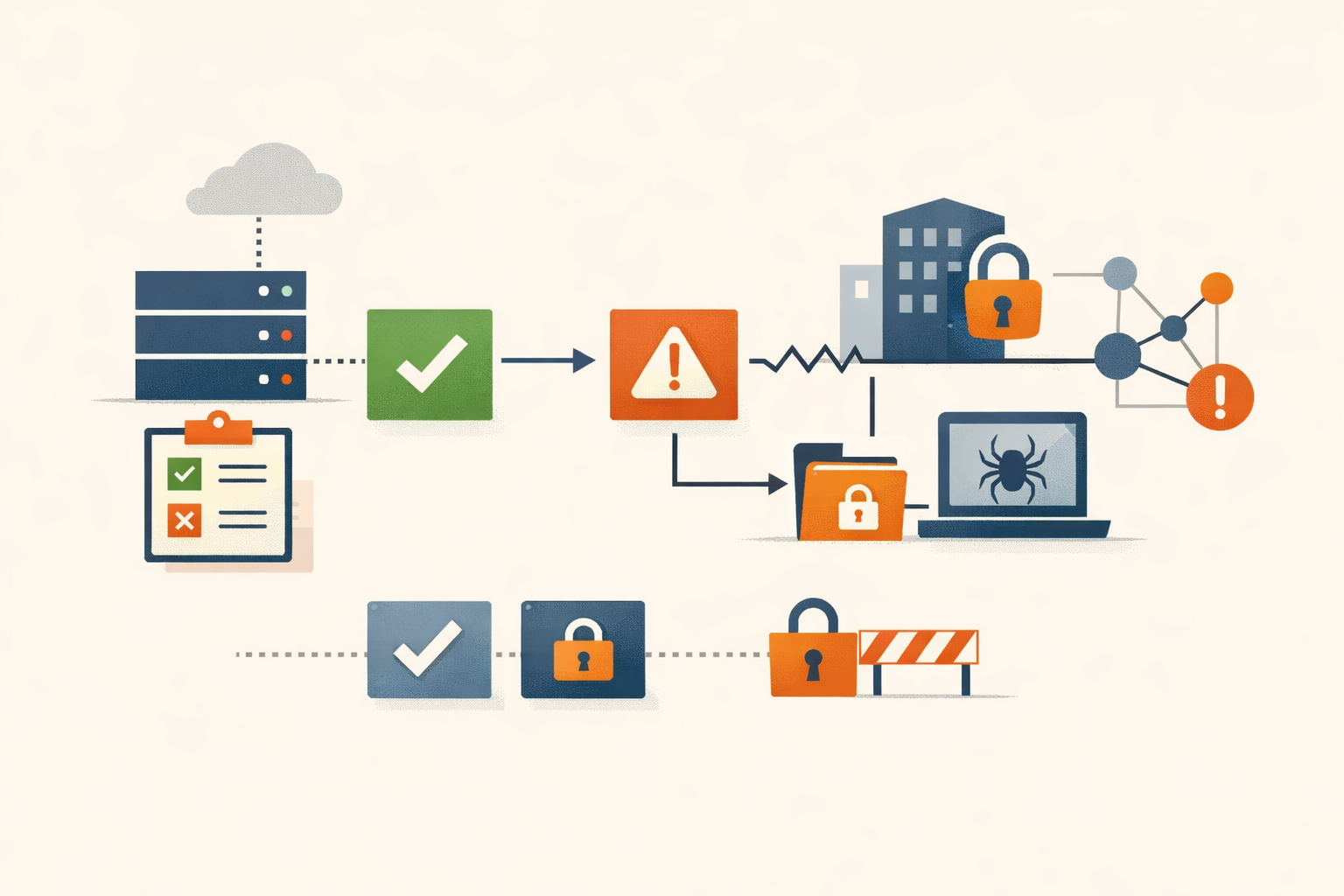
On October 2, 2025, Oracle published a blog post that told its customers, in effect, that the organizations getting breached through CVE-2025-61882 had failed to apply the July 2025 Critical Patch Update.
On October 3, Cl0p confirmed to BleepingComputer that it was a zero-day. The July CPU did not contain a fix.
On October 4, a Saturday evening, Oracle silently rewrote the blog post, removed the July CPU language, and shipped an emergency patch behind a support portal paywall. No correction notice. No acknowledgment that it had just spent 48 hours telling its customers to check for the wrong thing while Cl0p was inside their environments.
Twenty-nine organizations were already on Cl0p’s leak site by then, with data measured in hundreds of gigabytes to terabytes per victim. The vulnerability was real. The timeline was damning. But the disclosure is the story.
What CVE-2025-61882 actually is
CVSS 9.8. Pre-authentication remote code execution in Oracle E-Business Suite’s BI Publisher Integration, specifically the /OA_HTML/SyncServlet endpoint. CWE-287: Improper Authentication. Affected versions: EBS 12.2.3 through 12.2.14.
watchTowr characterized the exploit chain as “a poetic flow of numerous small/medium weaknesses.” Five stages: SSRF into CRLF injection into HTTP Keep-Alive connection reuse into path traversal into XSLT-based remote code execution. The attacker lands as applmgr, the service account that owns the EBS application tier. No credentials required at any stage.
Cl0p’s tooling was purpose-built. Mandiant tracked four tools under FIN11 attribution: GOLDVEIN, SAGEGIFT, SAGELEAF, and SAGEWAVE. SAGEWAVE persisted not on the filesystem but in EBS database tables (xdo_templates_b, xdo_lobs). Standard endpoint detection and file integrity monitoring wouldn’t find it. The attacker’s persistence mechanism lived inside the application’s own data store, which is either clever or obvious depending on whether you think of an EBS database as infrastructure or as a place where important things live unmonitored.
Suspicious activity appeared as early as July 10, 2025. Confirmed exploitation began August 9. When Oracle published its blog post on October 2, Cl0p had been inside affected environments for nearly two months.
The blame shift
Oracle’s October 2 post told a specific story: this vulnerability was addressed in the July 2025 CPU, and affected customers were those who hadn’t applied it. The implication was clear. This was a patching failure, not a product failure.
That story lasted approximately one day.
On October 3, ShinyHunters leaked the exploit on Telegram. The same day, Cl0p confirmed it was a zero-day, exploited before any patch existed. The July 2025 CPU did not contain a fix for this vulnerability.
The timeline matters because it shaped how organizations responded during the most critical window. From October 2 to October 4, security teams at affected organizations were operating under Oracle’s published guidance that this was a known, patched issue. Some teams deprioritized the response. Some reported to leadership that the fix was already available in a quarterly update. Some spent those 48 hours verifying their July CPU status instead of hunting for indicators of compromise.
Oracle’s first public statement directed its customers to check for the wrong thing. During active mass exploitation, the vendor’s instinct was to assign blame rather than provide accurate information. That is a choice with a body count measured in terabytes.
The Saturday night patch
Oracle released the emergency patch on a Saturday evening and routed it through My Oracle Support (MOS), the gated support portal that requires an active support contract and login credentials. This is not unusual for Oracle. It is, however, worth stating plainly: during active mass exploitation by one of the most prolific extortion groups operating, Oracle chose to put the patch behind a paywall on a weekend.
The patch itself, community-identified as 38501757 (XDO Diagnostic Patch), requires the October 2023 CPU as a prerequisite. Organizations that were behind on their patching cadence couldn’t just apply the emergency fix. They had to catch up first.
Integrigy reported that patch downloads for the related CVE-2025-61884 ran 10x lower than for CVE-2025-61882, which they attributed to the Saturday release timing. Weekend releases reduce download velocity because change advisory boards don’t convene on Saturdays and the people authorized to approve emergency patches are often unreachable. Oracle knows this. Everyone in enterprise software knows this.
Oracle also introduced confusion between the two CVEs. The October 4 advisory for CVE-2025-61882 listed UiServlet exploitation as an indicator of compromise, but UiServlet is the endpoint for CVE-2025-61884, not 61882. The SyncServlet endpoint is 61882. Neither patch covers the other. Organizations tracking IOCs from Oracle’s own advisory were pointed at the wrong endpoint for the CVE they were trying to remediate. A second misdirection in the same incident.
The damage
Twenty-nine named victims on Cl0p’s leak site: Harvard, The Washington Post, Schneider Electric, Logitech, Envoy Air, Cox Enterprises, Pan American Silver, among others. Data was confirmed leaked for 18 of them. This was pure extortion, no encryption. Ransom demands reportedly ran into the tens of millions per victim.
Imperva logged 557,000 attack attempts against the SyncServlet endpoint in a single day across more than 25 countries. The attack surface was small by internet standards. The value per target was not.
CISA added CVE-2025-61882 to the Known Exploited Vulnerabilities catalog on October 6, with a remediation deadline of October 27. That gave federal agencies 21 days. For EBS, which typically requires 2 to 4 weeks of regression testing against customizations plus 4 to 12 hours of application downtime, 21 days is aggressive under ideal conditions. Under conditions where the vendor spent the first 48 hours telling you the problem was already fixed, it borders on impossible.
Why this keeps happening
Oracle’s response to CVE-2025-61882 was not an isolated failure. It fits a pattern.
Patches route through a gated support portal. Security alerts arrive on weekends or holidays. Advisory language is ambiguous enough to create confusion between related but distinct vulnerabilities. And when the initial narrative is wrong, it gets quietly revised rather than corrected. Each decision is individually defensible from Oracle’s perspective. The cumulative effect is a disclosure process that works against the people it’s supposed to protect.
The blame-the-customer reflex is the most expensive part. When a vendor’s first instinct during active exploitation is to attribute the breach to customer patching failures, it introduces a 24-to-48-hour delay in incident response across the entire affected customer base. Not because the information was unavailable, but because the vendor chose to publish information that was wrong, and the customers who trusted the vendor’s advisory acted on it. Trust is the mechanism that makes advisories useful. Burning it during an active incident is not a communications failure. It’s a security failure.
What to expect
If you run EBS 12.2.3 through 12.2.14, patch 38501757 is the immediate priority, assuming you’ve met the October 2023 CPU prerequisite. If you haven’t, you have a sequencing problem that will take longer than any CISA deadline accommodates. The companion piece on CVE-2025-61884 covers the second patch (38512809) and compensating controls in detail; you need both.
Hunt for SAGEWAVE in your EBS database tables before you patch. If Cl0p persisted in xdo_templates_b or xdo_lobs, patching the entry point doesn’t remove the implant. Query those tables for entries created between July and October 2025 that don’t match your known template inventory. Check web server logs for requests to SyncServlet with the C2 IPs Mandiant published (200.107.207.26, 185.181.60.11). Any match means you’re past patching and into incident response.
The October 2025 CPU consolidates both fixes. If your next maintenance window is the quarterly cycle, that’s the path. If Cl0p was in your environment, you don’t have until the quarterly cycle.
Oracle’s disclosure failure didn’t create the vulnerability. But it burned the two most valuable days in the response window by telling customers to look for the wrong problem. That’s not a process gap. It’s a choice, and twenty-nine organizations paid for it.
Sources
- NVD - CVE-2025-61882
- Oracle Security Alert - CVE-2025-61882
- CISA Known Exploited Vulnerabilities Catalog
- Google Cloud / Mandiant - Oracle EBS Zero-Day Exploitation
- watchTowr Labs - Oracle E-Business Suite Pre-Auth RCE Chain CVE-2025-61882
- CrowdStrike - Campaign Targeting Oracle E-Business Suite Zero-Day
- BleepingComputer - Oracle Patches EBS Zero-Day Exploited in Cl0p Data Theft Attacks
- Tenable - CVE-2025-61882 FAQ
Share
Related field notes
-
Cl0p chained an Oracle EBS SSRF into a mass extortion campaign. Your patch window is 21 days.
CVE-2025-61884 is a pre-auth SSRF in Oracle E-Business Suite that Cl0p weaponized into a full RCE chain hitting 100+ organizations. Here's what patching EBS actually looks like under a KEV deadline.
-
ShinyHunters had 13 days inside PeopleSoft before Oracle said anything
CVE-2026-35273 is a CVSS 9.8 unauthenticated RCE in PeopleTools 8.61-8.62 that ShinyHunters exploited as a zero-day against 100+ organizations. The June 10 advisory arrived after the data was already on the leak site.
-
Three root shells in seven months. All from the same firewall.
CVE-2024-3400, CVE-2024-0012, and CVE-2024-9474 gave attackers unauthenticated root on Palo Alto firewalls twice in 2024. The pattern isn't bad luck. It's the architecture.
-
SAP NetWeaver was owned for ten weeks before anyone said anything
Five threat groups were already inside SAP NetWeaver when the emergency patch shipped. One confirmed victim reported multi-billion dollar profit impact. SAP's initial workaround guidance was later marked 'Do Not Use.'
Get the free CVE triage cheat sheet
Subscribe and we'll email you the one-page triage flow for fresh CVEs. Plus the weekly digest.
Subscribe