The AI under your SOC just became a supply-chain dependency
In three weeks of June 2026, the US government delayed, gated, or killed three frontier models on capability grounds. The pattern matters less than the discipline it should force.
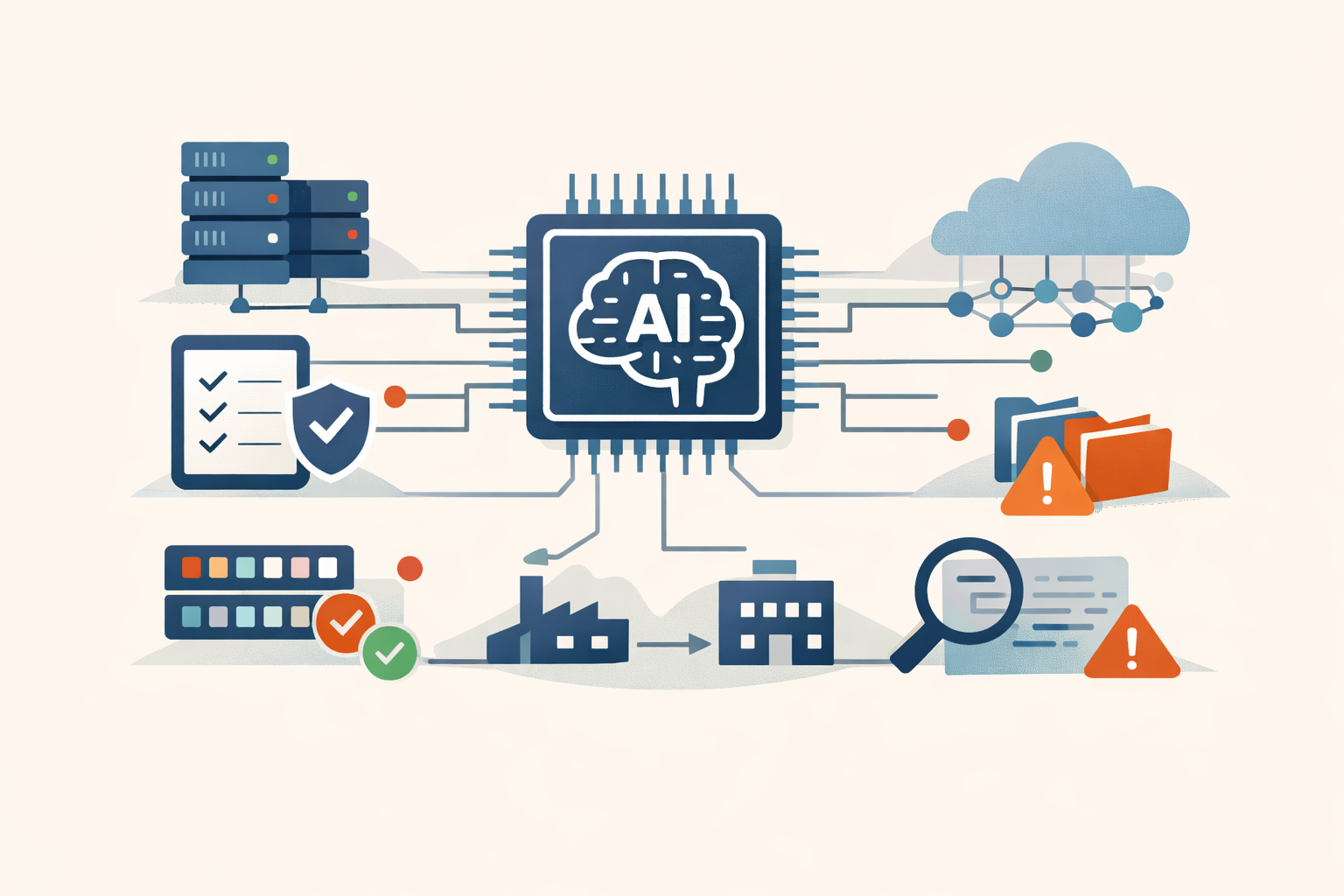
For most teams, a frontier-model release is a thing that happens to other people. You read the launch post, note that the new model is faster or cheaper, and go back to the tickets. The model your triage workflow actually calls is two generations old, pinned, and boring. That’s the obvious read, and for steady-state ops it’s mostly correct.
The more interesting detail is who decides when these models ship, and what they’re now deciding on.
The pattern: capability is the new gate
In a three-week stretch this June, the US government became a release gatekeeper for high-end AI capability. Not pricing, not safety theater. Capability, specifically the cyber and code-analysis kind.
On June 12, Anthropic disabled Fable 5 and Mythos 5 to comply with a US export-control directive. The order barred any foreign national, anywhere, from accessing either model, including Anthropic’s own non-citizen staff, so the company pulled both for every customer worldwide. The trigger, by Anthropic’s own description, was a jailbreak that “essentially consists of asking the model to read a specific codebase and fix any software flaws.” The National Law Review called it the first known use of export-control authority against a specific frontier model.
Two weeks later, on June 26, OpenAI gated GPT-5.6 at the government’s request, launching the Sol, Terra, and Luna line to a “small group of trusted partners” vetted customer by customer. OpenAI cited a “broader step change” in coding, biology, and cybersecurity, and said the access process “should not become the long-term default.” Worth keeping these two events distinct: an export-control foreign-national ban and a request to limit partners during a cyber review are different legal instruments, even if they rhyme. They were not the first signs either. Anthropic never publicly launched Mythos 5 at all; it went to a limited partner program, Project Glasswing, because the model could find and weaponize vulnerabilities. Anthropic’s red team reported a Windows-kernel proof of concept in 31 minutes.
The non-government delays are real but belong in their own buckets. Google slipped Gemini 3.5 Pro from June to July on polish, single-sourced and unconfirmed by Google. Meta delayed Llama 4 Behemoth for performance and region-locks Llama out of the EU over AI Act uncertainty. Four different reasons a release now slips: an export-control directive, regulatory geo-gating, a safety hold, and a plain capability delay. Blur them and you misjudge your own exposure, because each one bites a different kind of team.
The structural read across all of it: the most capable models, the ones vendors keep telling you to put under your security operations, are becoming less reliably available on a timeline you don’t control. Pre-deployment government testing is now institutional, with CAISI signing eval agreements with Google DeepMind, Microsoft, and xAI in May. Gated launches are the backdrop now, not the exception.
The dependency is more real than the panic
Here is where the story usually turns into a panic piece, and shouldn’t.
Security teams have quietly taken on this dependency. Darktrace reports 77% of professionals say generative AI is embedded in their security stack; that’s a vendor’s own survey, so weigh it accordingly. A separate SOC survey of 282 leaders found 55% run AI copilots in production for triage, the core daily work, pushed there by an average of 960 alerts a day and 40% going uninvestigated. Google now ships autonomous SOC agents that run an investigation and return a verdict. That design assumes a capable frontier model is on tap.
But the counter-case is strong enough that it changes the conclusion. Cadence is accelerating, not stalling; by some counts the gap between frontier releases has collapsed to weeks, though those are aggregator figures, not lab data. Day-to-day ops runs on stable, older, cheaper models, with the frontier reserved for the hardest reasoning. And newer is not automatically safer. An SPLX red team in August 2025 found raw GPT-5 fell for 89% of adversarial prompts and concluded the older GPT-4o “outperforms its successor across the board” on safety. Chasing the newest flagship is itself a risk.
So “frontier delays hurt sysadmins” is mostly false for the steady state and mostly true for the teams that chased the frontier. The delay bites the team mid-migration onto a now-gated model, or pinned to a version scheduled for retirement and waiting on its successor. Everyone else is largely insulated, and a fair number of them prefer the slower pace, because each minor model bump is a forced re-validation cycle they didn’t ask for.
The recurring pain isn’t the delay
Watch what actually breaks operations, and it isn’t a late launch. It’s the model you already depend on changing or going away under you.
Promptfoo documented a GPT-4o to GPT-4.1 migration where prompt-injection resistance dropped from 94% to 71% on the customer’s own eval harness, because the newer model followed instructions more literally, including malicious ones buried in retrieved documents. Their rule is worth quoting flat: “treat model upgrades as security changes, not just quality upgrades. Pin model IDs. Do not ship ‘latest’.” A quality upgrade silently became a security regression, and only an eval harness caught it.
Deprecation is the other recurring event. In January, OpenAI announced it would sunset several models from ChatGPT on roughly two weeks’ notice, against Sam Altman’s prior promise of “plenty of notice.” There’s no clean postmortem of a deprecation taking down a named security workflow, and I won’t invent one. But the providers tell you plainly what happens at the end: Microsoft says provisioned deployments are not auto-upgraded and retirement dates aren’t extendable; AWS says migration will not happen automatically. The lever you have is the notice window, not an availability guarantee.
What this should change about how you prioritize
The single decision worth making now: treat model availability as a managed dependency, the same way you’d treat any vendor whose product sits in a critical path.
That’s a posture, not a checklist, and the moves are familiar to anyone who’s managed a fragile upstream. Put a gateway between your tooling and the model so the model ID is config, not code, and one edit reroutes every workflow. Pin unattended jobs to a dated snapshot rather than a floating alias, then track that pin’s retirement as a calendar item. Keep a golden eval set and run any replacement against it before you flip, because migrations break on tool strictness, latency, and cost, not just the model name. Map region and residency constraints up front; after the Anthropic ban, nationality is now an availability axis too. The full runbook is a separate piece. The prioritization call is this: the discipline that protects you from a delayed model is the same discipline that protects you from a deprecated, region-gated, or silently-changed one. June just made the case for building it now instead of after the next gate drops.
What to watch
The question that confirms or kills the pattern is whether June was an episode or a precedent. OpenAI’s bet is that customer-by-customer government vetting “should not become the long-term default.” If the next high-capability launch ships gated too, that bet is lost and you’re managing a supply line with a regulator in it. Mythos 5 is a partial tell here: it’s been conditionally reopened to a vetted set of defenders, not restored, with no full-restoration date as of this writing. A model that comes back only for cleared operators is the gated future in miniature.
This generalizes a story we covered when a single model got pulled, in the Fable 5 takedown, and it’s the supply-side half of our 2026-2028 patch-management forecast, which argued AI lands on both sides of the patch window. PatchDayAlert will keep tracking model lifecycle events, deprecations, gating directives, and retirement dates, the same way we track CVEs, because for a growing number of SOCs they now carry the same operational weight.
Sources
- Anthropic disables access to Fable 5 and Mythos 5 (CNBC) — 2026-06-12
- Anthropic statement on Fable and Mythos access — 2026
- AI Company Anthropic Suspends Access to Claude Fable 5 and Mythos 5 (National Law Review) — 2026
- OpenAI limits GPT-5.6 rollout after government request (TechCrunch) — 2026-06-26
- Project Glasswing (Anthropic) — 2026
- Mythos preview (Anthropic red team) — 2026
- Google delays Gemini 3.5 Pro to July (Investing.com) — 2026
- Meta to postpone release of Llama 4 Behemoth (SiliconANGLE) — 2025-05-15
- Meta restricts multimodal models in the EU (deeplearning.ai) — 2025
- US government agency to safety-test frontier AI models before release (CIO) — 2026
- Over three-quarters of security professionals concerned about AI agent risk (Darktrace) — 2026-02-03
- The State of AI in the SOC 2025 (The Hacker News) — 2025
- The dawn of agentic AI in security operations (Google Cloud) — 2025
- Top 10 LLMs (Azumo) — 2025
- Frontier model release velocity index Q2 2026 (DigitalApplied) — 2026
- Red teams breach GPT-5 with ease (SecurityWeek) — 2025-08
- Model upgrades break agent safety (Promptfoo) — 2025
- OpenAI GPT deprecations (The Register) — 2026-01-30
- Azure OpenAI model retirements (Microsoft Learn) — 2026
- Amazon Bedrock model lifecycle (AWS) — 2026
Share
Related field notes
-
A model was pulled for being too good at finding bugs
Anthropic shipped Claude Fable 5 and Mythos 5, then a federal directive killed both three days later. In May we forecast the patch window had gone negative; this is the first time a regulator reached for a kill switch to agree.
-
The patch window went negative. Now what?
Mandiant's mean time-to-exploit is negative seven days. NVD gave up on enriching most of the catalog. Here's what the next 24 months of patch management actually look like with AI on both sides.
-
Daybreak shipped without a single number of its own
OpenAI announced an end-to-end vulnerability detection and patching platform on May 12, then borrowed every performance figure from its predecessors. The borrowed figures don't help its case.
-
50 CVEs in 18 months is not a growing pain. It's a design choice the industry keeps making.
MCP went from unknown to default AI integration in under two years. The vulnerability count, the OWASP Top 10, and the simultaneous client failures tell a story about what happens when adoption is the only metric.
Get the free CVE triage cheat sheet
Subscribe and we'll email you the one-page triage flow for fresh CVEs. Plus the weekly digest.
Subscribe